
Wheelbase Explained: How to Unlock the World of Direct Rentals
Direct Rentals

Wheelbase Explained: How to Unlock the World of Direct Rentals
If you’re in car sharing long enough, you eventually run into the same fork in the road. Should you stick wiht Turo for 100% of your scaling & fleet needs? Or should you start diverisfying and building something on your own?
Let's dig into some of the considerations you should take when diversifying and how the platform Wheelbase Pro can help you diversify like a pro.
Why Direct Rentals Aren't So Simple
Most hosts start on Turo. That makes sense. It’s simple, it has built-in demand, and it protects you while you’re learning. But over time, as fleets grow and obligations increase, you start thinking about control, diversification, and long-term stability. That’s usually when direct rentals enter the conversation.
The problem is that very few people actually understand what it takes to run a private rental operation correctly.
Sure, Turo takes 10, 20, or 30% but they also provide marketing, customer support, claims support and everything in between. When you go direct, all of that and more gets put on your plate - you now have to insure yourself and your guests, manage rentals, market your fleet and more.
While there isn't a one size fits all solution to all of these problems, there is one tool that can make a major difference, Wheelbase Pro.
What Is Wheelbase Pro?
Wheelbase is a backend rental management platform. Think of it as the operating system for your direct rental business.
Unlike Turo, it doesn’t market your cars. It doesn’t generate traffic. It doesn’t handle demand. What it does is give you the tools to manage bookings, contracts, insurance, documents, payments, and fleet logistics from one centralized dashboard.
If you’ve ever visited a private rental website and been able to:
- Choose your dates
- Add extras
- Upload documents
- Pay a deposit
- Purchase insurance
- Complete the entire booking online
There’s a good chance something like Wheelbase is powering it behind the scenes.
Without software like this, your website is just photos and a contact form. With it, you can operate like a legitimate rental agency.
How Wheelbase Fits Into a Real Website
.png)
Most operators integrate Wheelbase into a WordPress site. From the outside, it looks like a fully custom rental platform. From the inside, everything runs through the Wheelbase dashboard.
When a booking comes in, you’re not guessing what’s complete and what isn’t. You can see:
- Whether the rental agreement has been signed
- Whether insurance has been verified
- Whether the deposit has cleared
- Whether all documents are uploaded
Only once everything checks out do you check the car out to the guest.
It’s structured. It’s controlled. It’s far more formal than just “Venmo me and take the keys.”
Wheelbase vs Turo: The Real Difference
This is where most new hosts get confused.
Turo is a marketplace. They bring the customers. They handle disputes. They provide the protection structure. They set the rules. You operate within their ecosystem.
Wheelbase is software. You bring the customers. You handle the marketing. You manage risk. You control policies. You make the rules.
With Turo, you trade control for protection.
With Wheelbase, you trade protection for independence.
Neither model is inherently better. They’re just different stages of business development.
For someone brand new, Turo makes sense. You get demand and guardrails.
For someone experienced, direct rentals can make sense, but only if you understand the risks.
And in my opinion, the strongest operators eventually run both.
The Premium Services That Actually Matter
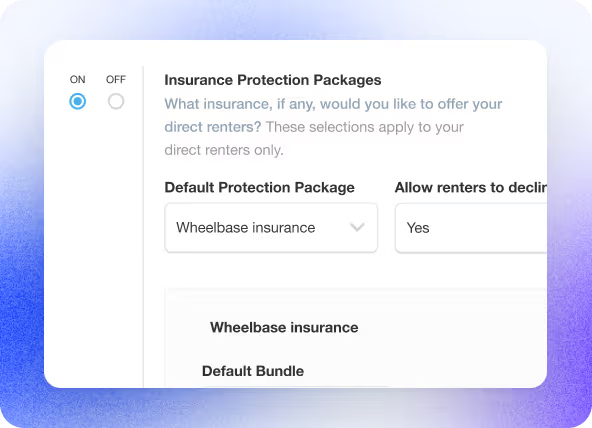
One of the reasons Wheelbase stands out is the way it integrates premium services directly into your checkout flow.
When a guest books, they can add things like roadside assistance, toll coverage, trip insurance, driver checks, and most importantly: daily insurance coverage.
That last one is the game changer.
A lot of direct rental customers don’t have personal insurance that extends to rentals. Many don’t have credit cards that provide rental coverage either. Without a daily insurance option, you’re cutting out a huge portion of potential renters.
Being able to offer insurance at a daily rate removes friction. It increases approval rates. And it protects your fleet.
For many operators, that alone makes the platform worth it.
Managing a Fleet Inside Wheelbase
From the operator side, the dashboard feels familiar if you’ve used Turo. You list vehicles, upload photos, set rates, define rules, and manage calendars.
But here’s the difference: it’s your system:
- You can send custom quotes.
- You can build your own database.
- You can automate certain communications.
- You can structure your approval process however you want.
There are areas where I’d love to see more automation, especially around texting, but overall, it’s built specifically for rental car operations. Not hospitality. Not generic booking. Not tourism. Vehicles.
That focus matters.
The Operational Friction Nobody Talks About
Now let’s talk about reality.
If you run both Turo and direct rentals, calendar management becomes your responsibility. There’s no seamless two-way integration. That means if a car books on one platform, you need to block it on the other.
Miss it once, and you risk a double booking.
Double bookings are painful. They damage reputation. They create refunds. They cost time and credibility.
This is why most experienced operators don’t just blindly cross-list everything. They’re strategic. They might move underperforming vehicles to direct. They might create backup inventory. They might separate fleets entirely.
The logistics matter more than the software.
Why a Direct Fleet Creates Peace of Mind

As fleets grow, so do obligations like payroll, shop rent, insurance, car payments & operating costs.
If 100% of your revenue is tied to one platform and something happens to that account, your business is exposed.
That’s the part most people don’t think about until it’s too late.
Building a direct rental arm isn’t just about margins. It’s about resilience. It’s about having another revenue channel. It’s about knowing that if a platform policy changes or an account gets restricted, you’re not starting from zero.
For me personally, building a direct fleet provided an immense amount of peace of mind.
It wasn’t about replacing Turo.
It was about not being completely dependent on it.
Watch the Full Breakdown
If you want to see exactly how this works in practice, I walk through it step-by-step in this video:

