
How We Stopped Losing Money on Turo Damage Claims With One QR Code
Turo Strategy

Turo just made damage claims more expensive for guests. If you haven't felt the impact yet, you will.
The platform updated its deductible policy, shifting more of the financial burden onto renters when damage occurs. On the surface, that sounds like it protects hosts. But here's the reality most fleet operators don't talk about: the deductible policy doesn't matter if you're filing claims through Turo when you shouldn't be.
Every time a third party causes damage to your vehicle — a rear-end collision, a parking lot hit-and-run, someone running a red light — you have an option. You can file through Turo, or you can go after the at-fault party's insurance directly. The second option is almost always better. No platform involvement, no claim history on your Turo profile, and no deductible drama.
The problem is your guests aren't collecting what you need to make that happen.
The Real Cost of an Incomplete Accident Report
Most Turo hosts have been here: your guest returns the car with front-end damage, tells you someone hit them, and hands you absolutely nothing useful. No insurance card. No license plate. Maybe a blurry photo of a bumper. Sometimes not even that.

Without the at-fault driver's information, your third-party claim is dead on arrival. You're forced back into the Turo system, which means you're now dealing with deductibles, claim timelines, and potential platform friction — all for an accident that wasn't your guest's fault and wasn't yours either.
This is where the money actually leaks out of Turo fleets. Not from the damage itself, but from the inability to route the claim correctly because the documentation simply isn't there.
It's not that guests are careless on purpose. They're flustered. They've never been in this situation before. They don't know what a fleet operator needs, and in the chaos of an accident, they default to doing almost nothing useful. That's not a guest problem — that's a systems problem on your end.
The QR Code System That Changed How We Handle Accidents
Here's what one fleet operator started doing, and it's one of the smarter operational moves I've seen at this scale.
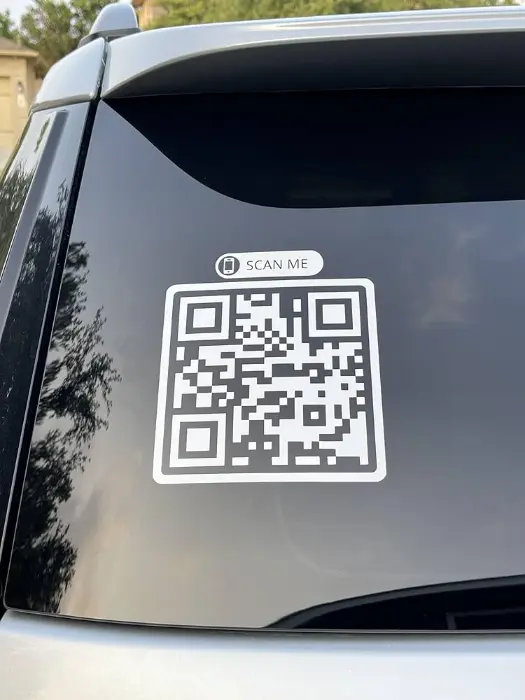
Inside each vehicle, right next to the oil change sticker on the windshield, there's a small card with a QR code. Above it, simple text: Report an accident. That's it. Nothing complicated, nothing that requires the guest to think.
When a guest scans the code, it takes them directly to a form — built specifically for this fleet's needs — that walks them through exactly what to collect at the scene. We're talking:
- Driver's license number of the at-fault party
- License plate number
- Insurance company and policy number
- Photos of both vehicles, the scene, and any damage
- Contact information
The form does the thinking for them. It prompts them step by step so nothing gets skipped. And because it lives on their phone through the QR code, there's no paper to lose, no app to download, no friction.

This works because it meets guests where they are. In an accident, people reach for their phones. If your QR code is visible and the path from scan to form is instant, you've dramatically increased the odds they collect what you actually need.
Why Third-Party Claims Are Worth the Extra Setup
Let's be clear about why this matters financially.
When you file through Turo, you're working within the platform's process. There may be deductibles involved depending on the protection plan selected, the claim can affect your standing, and you're dependent on Turo's timeline and decisions.
When you file directly against the at-fault party's insurance, you're dealing with their carrier. The at-fault driver's insurance is liable. Your deductible situation with Turo becomes irrelevant. You get paid for the damage without touching your Turo claim history.
The catch is that the at-fault party's insurer needs information to process the claim. If you can't tell them who their policyholder is, you have nothing. That's why the guest's data collection at the scene is the entire game.
This is where most hosts give up. They assume there's nothing they can do once the guest returns the car without information. But the system above is specifically designed to prevent that from happening in the first place.
What Most Fleet Operators Get Wrong About Damage Mitigation
Here's where most people get this wrong: they focus almost entirely on the back-end of damage claims — disputing amounts, negotiating with Turo, chasing reimbursements — and almost zero effort goes into the front-end, which is what happens in the first five minutes after an accident.
Those first five minutes determine everything. Whether you can file a third-party claim, whether you can prove fault, whether you have enough documentation to support any claim at all. After the guest drives away from the scene, that window is closed.
A lot of operators also assume that because they have Turo's protection or their own commercial policy, they're covered no matter what. They are — but coverage and outcome are two different things. You might technically get paid, but you've still burned time, potentially absorbed a deductible, and added a claim to your record.
The operators who run clean, profitable fleets aren't just better at handling claims. They're better at preventing the conditions that make bad claims inevitable.
How to Build Your Own Version of This System
You don't need a massive fleet or a dedicated operations team to implement something like this. The core of it is simple.
Start with the form. Tools like Google Forms, Jotform, or Typeform can be set up in under an hour. Build it to collect exactly what a third-party insurance claim requires: full name, license number, plate number, insurance carrier, policy number, and photos. Make it mobile-friendly and test it on your own phone before you put it anywhere.
Generate a QR code from the form link — there are free tools for this everywhere. Print it on a small card or sticker, laminate it if you want it to last, and place it somewhere visible inside the cabin. Next to the oil change sticker is smart because that's windshield real estate guests actually look at. Add a single line of text above it so the purpose is immediately clear.
Then mention it in your guest handoff. You don't need a long explanation. "If you're ever in an accident, scan that QR code on the windshield and it'll walk you through everything" takes about ten seconds to say and it plants the memory.
That's the entire system. Low cost, low effort, and it directly protects your ability to route claims correctly.
The Shift That Actually Matters
Turo's deductible changes are a symptom of a broader reality: the platform is tightening, costs are rising, and the hosts who survive the margin compression are the ones who treat their fleet like a business with real operating procedures.
A QR code in your car isn't a gimmick. It's an operational system. It's the difference between having documentation and having nothing when it counts. And right now, with claim costs higher than they've ever been on Turo, "nothing" is something you genuinely can't afford.
If you're running more than a car or two, this is worth an afternoon of your time to set up. The first claim where your guest actually returns usable information will pay for the effort ten times over.

